Recycled Cotton vs Organic Cotton Sheets: Which Is Actually More Sustainable?
If sustainability is your main reason for buying, recycled cotton sheets are the stronger choice. Recycling existing cotton skips farming entirely, so it uses a fraction of the water, land, and carbon that growing organic cotton requires, and it keeps textile waste out of landfill. Organic cotton still earns its place: it is grown without synthetic pesticides, which matters if you have sensitive skin or want a certified chemical-free supply chain. The honest answer is that both beat conventional cotton easily, and the right pick depends on whether your priority is environmental impact or certified purity. Here is how they compare on the points that matter.
In this article
- What is the difference between recycled and organic cotton?
- Which is more sustainable?
- Do recycled cotton sheets feel different?
- How long do recycled cotton sheets last?
- Which should you choose?
- FAQ
What is the difference between recycled and organic cotton?
Both are 100% cotton. The difference is where the fibre comes from.
Organic cotton is grown from scratch on farms that avoid synthetic pesticides and fertilizers, usually verified by a certification like GOTS (Global Organic Textile Standard). It is better farming, but it is still farming: the plant needs land, irrigation, and a full growing season.
Recycled cotton skips the farm. Existing cotton is sorted by colour, mechanically shredded back into fibre, and spun into new yarn. Some brands recycle post-consumer textiles (old clothes and worn-out linens). At Merrily we focus on pre-consumer offcuts: the clean, never-worn cotton left over when garment factories cut their patterns. It is more consistent fibre, and it would otherwise go straight to landfill. Either way, no new cotton is planted.
Which is more sustainable, recycled or organic cotton?
Recycled cotton, and it is not close. Because the fibre already exists, recycling avoids the most resource-hungry stage of any cotton product's life: growing it. No irrigation water, no farmland, no pesticides, and far less energy than producing virgin fibre. Analyses of recycled cotton production consistently find it conserves water, energy, and resources while diverting textile waste from landfill. Organic cotton reduces chemical inputs, but it still consumes water and farmland at a scale recycling simply does not.
There is also the waste side of the ledger. The fashion and textile industry discards millions of tonnes of cotton every year. Organic cotton does nothing to shrink that pile. Recycled cotton is made from it.
| Factor | Recycled cotton | Organic cotton |
|---|---|---|
| Water use | Minimal (no farming) | High (irrigated crop) |
| Carbon footprint | Lowest of any cotton | Moderate |
| Diverts textile waste | Yes | No |
| Pesticide-free growing | Depends on source fibre | Yes, certified |
| Typical feel | Relaxed, lived-in texture | Varies by weave |
| Price (queen set, CAD) | $150 to $200 | $200 to $300+ |

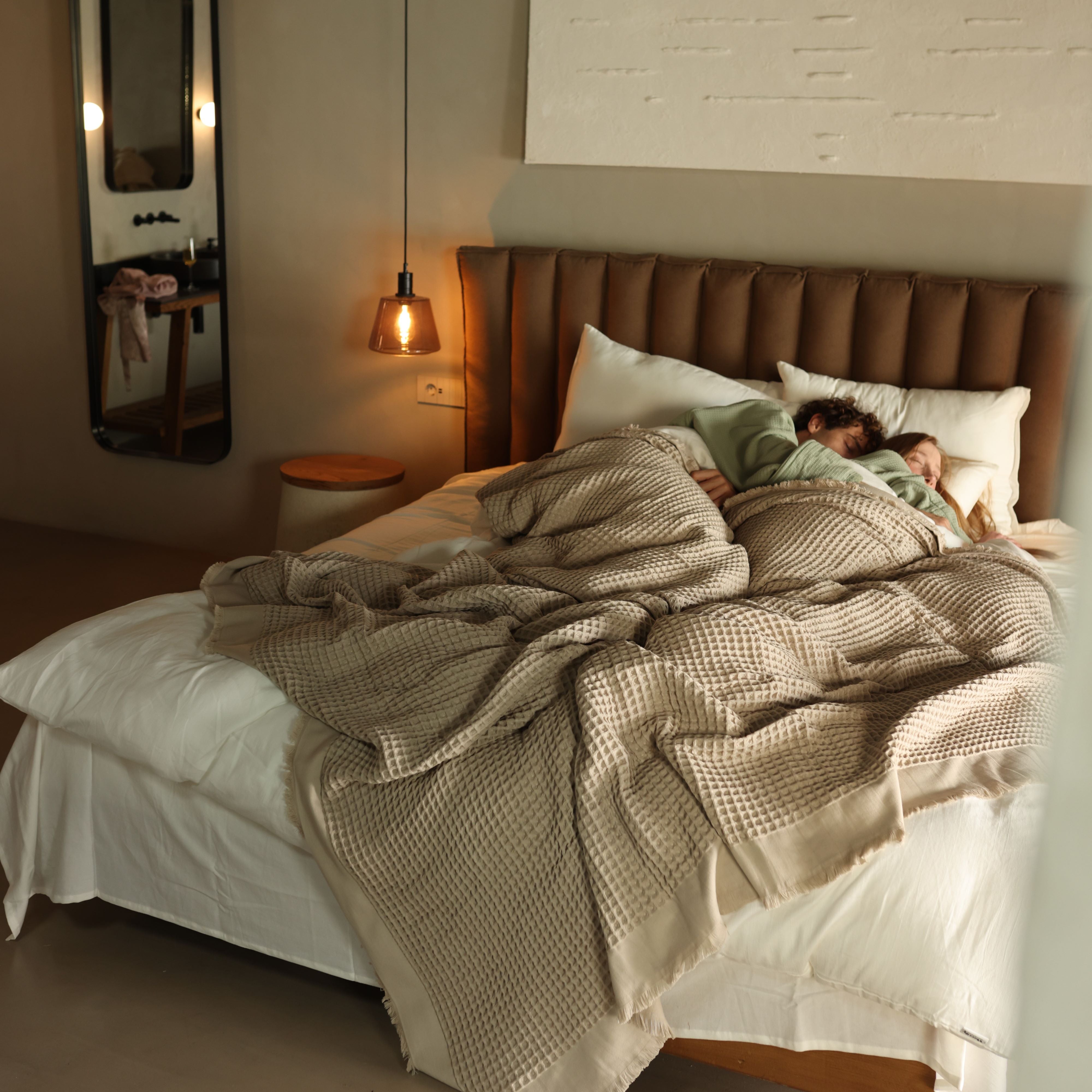
Recycled Turkish cotton with a relaxed, textured weave and a bold indigo stripe. No new cotton grown, no waste to landfill.
Do recycled cotton sheets feel different?
Yes, and honest brands say so. Mechanical recycling shortens the cotton fibre, so recycled yarns are usually spun a little thicker and woven at a lower thread count than a fine sateen. The result is not worse, it is different: a relaxed, slightly textured hand that feels closer to well-washed vintage linen than to a slick hotel sheet. Our own Sustainable collection is woven from recycled Turkish cotton at a 144-thread count for exactly this reason. The texture is the point.
If you want a crisp, cool, tightly woven sheet, a percale is still the better match. If you like bedding that looks softly rumpled and gets better with every wash, recycled cotton delivers that on night one.
"Really soft sheet covers and good colors!"

How long do recycled cotton sheets last?
With normal care, expect years of use, the same as any quality cotton sheet. The shorter fibre does mean recycled cotton can pill slightly more than a long-staple virgin cotton if you abuse it in the wash. Three habits prevent that almost entirely:
- Wash cold or warm (30 degrees), never hot. Heat is what breaks fibres down.
- Skip fabric softener. It coats the fibre and encourages pilling. Recycled cotton softens on its own with each wash.
- Line dry or tumble dry low, and take sheets out slightly damp if you can.
One more durability point in recycled cotton's favour: the fibre in your sheets has already survived one full life as fabric. It has been stress-tested in a way new cotton never has.

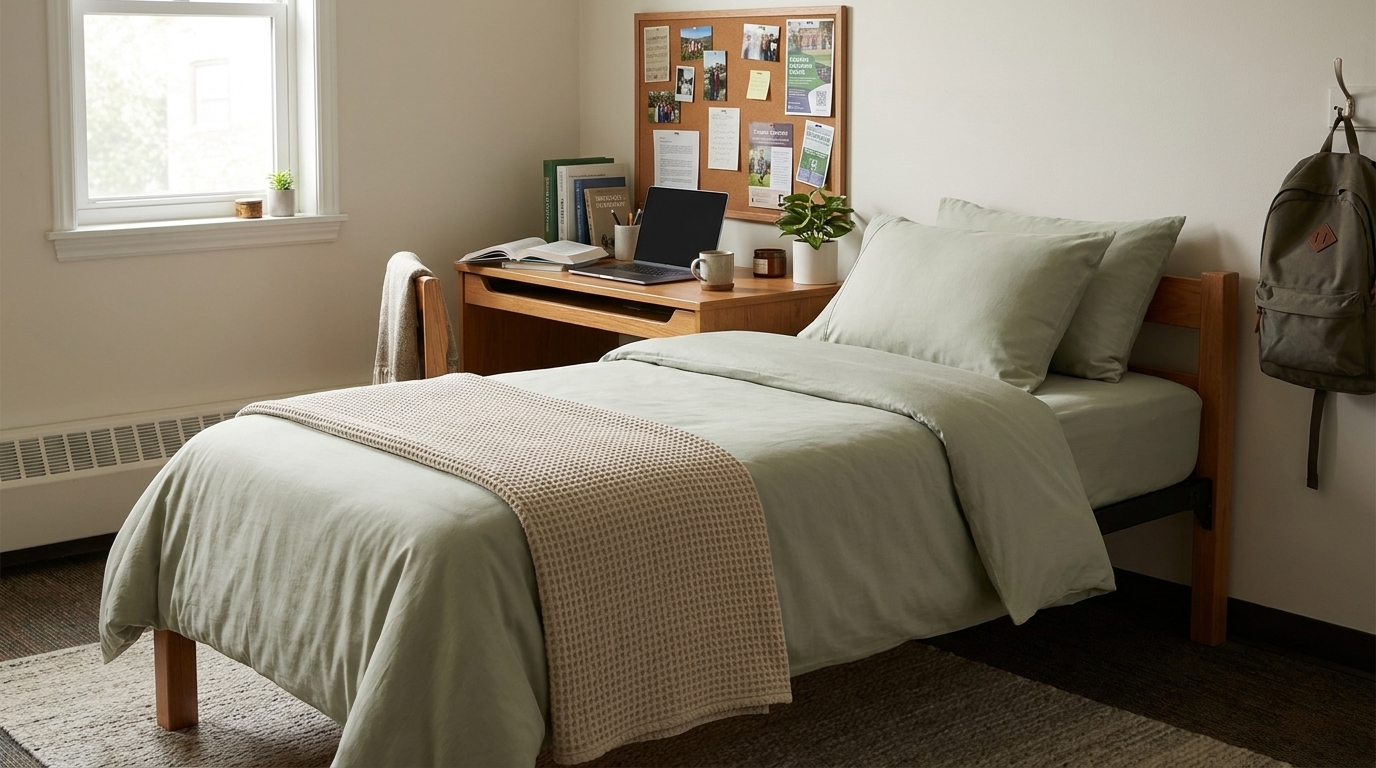
The same relaxed recycled weave, sized for your duvet. Twin to King in indigo stripe.
Which should you choose?
Choose recycled cotton if your priority is the smallest environmental footprint, you like a relaxed and textured look, and you want sustainable bedding without the organic price premium. And you give up nothing on the fabric itself: our Sustainable collection is still 100% Turkish cotton, the same fibre pedigree as our virgin-cotton sets.
There is also the look. Most bedding, ours included, plays it safe with single solid colours. The Sustainable collection is the exception: a bold indigo stripe that reads more boutique-hotel than big-box. If you love the striped look, that alone is a reason to choose it, and the sustainability story becomes the bonus you get to tell your friends about.
Choose organic cotton if certified pesticide-free growing is non-negotiable for you, for example due to skin sensitivity, and you are comfortable paying more for the certification.
Either way, avoid one trap: "eco" bamboo sheets are usually viscose rayon, a fibre made by dissolving bamboo in harsh chemicals. Both Canadian and US regulators require it to be labelled "rayon made from bamboo" for exactly that reason. A sheet made from actual cotton, recycled or organic, is the more honest sustainable choice.
Frequently asked questions
Is recycled cotton good for bedding?
Yes. Recycled cotton is 100% real cotton, so it is breathable, machine washable, and biodegradable like any cotton sheet. The main difference is texture: shorter recycled fibres create a relaxed, slightly textured weave rather than a silky-smooth one.
Does recycled cotton pill?
It can pill slightly more than long-staple virgin cotton because the fibres are shorter. Washing cold, skipping fabric softener, and drying on low heat prevents most pilling and keeps the fabric improving with age.
Is recycled cotton the same as organic cotton?
No. Organic cotton is newly grown without synthetic pesticides. Recycled cotton is existing cotton fabric shredded and respun into new yarn, so nothing new is grown at all. Recycled cotton has the lower environmental footprint; organic cotton carries the pesticide-free certification.
How should I wash recycled cotton sheets?
Machine wash cold or at 30 degrees with a gentle detergent, no fabric softener, and tumble dry low or line dry. Expect them to get noticeably softer over the first five to ten washes.
Sleep on cotton that already existed
The Sustainable collection is woven from recycled Turkish cotton. No new crop, no waste to landfill, from $120 CAD.
Shop the Sustainable collection →Free shipping across Canada, no minimum.